
Hamilton Township City Directory Holdings
Hamilton Township is historically rural and suburban, with addresses associated with Maineville, Morrow, Loveland, Goshen, and South Lebanon. The research did not verify a standalone annual Township directory, a publisher run, a reverse-directory run, or a shelf list. The confirmed starting point is the Warren County Genealogical Society, whose research page identifies a City Directories collection while its detailed directory page remains under construction. That is useful evidence of a collection, but not a license to assign it years, publishers, or an unverified criss-cross volume.
Use the collection as a research lead. Ask staff to check the catalog for the township, postal-place names, a surname, or an area phone book, then record the exact volume title before drawing a conclusion. When a book is unavailable, the county's deed indexes, tax materials, newspapers, cemetery ledgers, and historical indexes provide dated alternatives. They answer different questions, so each item should be kept as its own source rather than merged into an assumed household list.
| Collection | Years | Where Held | Access |
|---|---|---|---|
| WCGS City Directories collection | Year run not confirmed | Warren County Genealogical Society library | Catalog and desk inquiry |
| WCGS deed-index books | 1799-1832 | WCGS, with Recorder follow-up | Index, then volume/page instrument |
| Lebanon Western Star collection | 1807-2013, with some issues missing | Ohio Memory and WCGS project | Free name, title, or date search |
| County Records Center holdings | Records 75 years and older in its collection | Records Center & Archives | Index, short request, or research visit |
| Township cemetery records | Year run not published | Hamilton Township Administration | Phone or email for a named record |
These holdings make a careful Hamilton Township collection search possible without claiming a continuous printed series. The most dependable result is a dated source statement, such as a deed-index reference or a newspaper notice, followed by the original record where available.
Why Hamilton Township Has No City Directory
Hamilton Township is not the City of Hamilton and has no separate municipal recorder, assessor, or general trial court. County records are kept in Lebanon, while township-created material stays with the Township. Postal labels add another complication. A Maineville, Loveland, Morrow, Goshen, or South Lebanon mailing place can occur with a Hamilton Township address, so a city name on an old clipping or envelope does not settle the government jurisdiction.
For a historical directory question, use Warren County as the first geographic filter and then preserve the place name exactly as printed. The Warren County Auditor's Township field and GIS or tax-district data can help test a questionable place reference. Older descriptions may use community names such as Hopkinsville, Murdoch, or Cozaddale, or a road name that differs from the modern label. A parcel or legal description is stronger than a postal pattern.
Note: A directory-style reference can locate a person in an era, but it does not by itself prove a present address or every member of a household.
Hamilton Township City Directories at WCGS
The Warren County Genealogical Society Resource Library is the practical first stop for the historical shelf. It is at 406 Justice Drive in Lebanon, open to the public Monday through Friday from 9 a.m. to 4 p.m., and operates as a FamilySearch Affiliate Library. Its research routes point to its library catalog along with county land, tax, obituary, cemetery, court, church, school, and vital-record resources. Those nearby sources are valuable when a requested Hamilton Township directory volume has not been confirmed in advance.
The WCGS library page shows the public research setting and the Society's local-history resources.
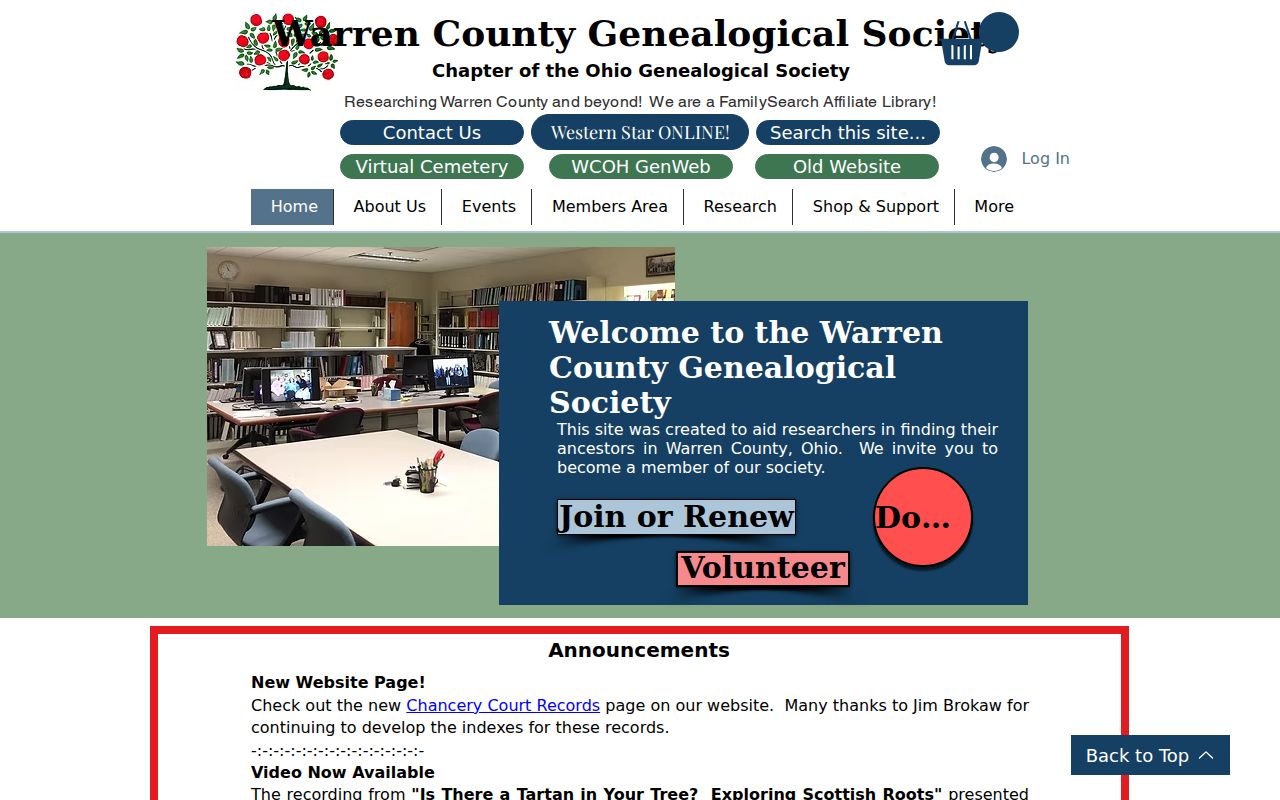
Use the catalog or staff desk to identify a real title and its access limits before recording any directory entry. The Society also directs researchers to digitized newspapers and county research tools, giving a useful fallback when a book is not on an open shelf.
WCGS's land-record guide documents grantor/grantee and grantee/grantor deed indexes for 1799 through 1832. A surname from those books can lead to a volume and page, then to the County Recorder's instrument. That chain is especially helpful where a historic property description has no modern street number.
Hamilton Township Newspaper and Road Clues
The Lebanon Western Star collection on Ohio Memory is a strong companion to a historical directory search because it covers Warren County and nearby communities from 1807 through 2013. WCGS reports that the Alleen Stephenson Digital Newspaper Project placed 178,510 pages from 9,909 issues in the searchable and browsable collection, while cautioning that some issues are missing. Search a person, place, or date, then retain the issue date and page with the result.
A newspaper index is a locator, not final proof. An obituary, social item, land-sale notice, school notice, or probate notice can suggest a relationship or location. Read the original item and compare it with a deed, tax record, census entry, cemetery record, or court document from the same period. WCGS also maintains an alphabetical obituary index, last reported as updated May 5, 2022, which can point a researcher to the underlying notice.
Federal census records are another useful companion. The National Archives releases census material after 72 years, and the current public run reaches 1950. A census can place named household members in a dated enumeration, but it is not a modern street directory and rural entries may lack a present-style number.
| 1787 onward | Virginia Military District surveys and early tract descriptions precede modern street-address patterns. |
|---|---|
| 1799-1832 | WCGS maintains grantor/grantee and grantee/grantor deed-index coverage for this period. |
| 1807-2013 | The Western Star supplies a long, but incomplete, searchable newspaper context for Warren County communities. |
| April 20, 2016 | The Recorder's Search Info page says most documents were online by this date, while older access can still differ by item. |
Reading Hamilton Township City Directory Clues
No verified Hamilton Township or Warren County directory page was available for inspection in the research. For that reason, no sample entry, abbreviation key, spouse notation, owner mark, or occupation field should be presented as if it came from a local volume. When a volume is consulted, inventory only what that specific page displays, photograph its abbreviation key when present, and keep the title, publisher, year, and page number alongside the transcription.
The best documented entry alternatives are the Recorder's deed index and the Western Star search context. In the Recorder system, a party name can be one of several roles, so the deed image controls. In a newspaper result, a name/date hit points to an item that still needs to be read in context. This distinction prevents a useful clue from becoming an unsupported family claim.
| Recorder index result | Party names, document type and number, recorded date, book/page, parcel or legal-description detail, and image availability where supplied. |
|---|---|
| Western Star result | Name, title or date search context, and a route to the original digitized issue when available. |
| Directory volume in hand | Record only the fields visibly printed on that actual page. The local sample-entry layout was not verified. |
- Criss-cross directory
- A street-ordered directory that can be useful when a particular consulted volume actually includes one. No Hamilton Township reverse run was verified.
- Householder index
- An index organized around a household name, if the volume provides that feature. It should not be assumed from a city-directory title alone.
- Abbreviation key
- The printed explanation for a volume's shorthand. Its meaning must be taken from that volume, not borrowed from another publisher.
Hamilton Township City Directory Myth
A name in a Hamilton Township directory, a parcel map, or a voter result does not create a complete roster for an address. A property card identifies an owner of record and may show a tax mailing address. A deed may show a buyer, seller, lender, trustee, or other party. A directory can be selective, dated, or incomplete. Each is useful only for its stated field and date.
That limit matters when tracing relatives, heirs, or a former classmate. Confirm a connection with at least two independent, non-sensitive identifiers, such as a complete middle name and a dated address, or a legal description paired with a parcel number. Write down the search date and record identifier. If sources disagree, state the conflict rather than selecting the result that looks most convenient.
Tracing Hamilton Township City Directories
When an actual directory or phone book is located, trace the household one dated item at a time. Begin with a known year and surname, note the wording exactly, and then compare the next available year rather than assuming the collection is complete. Pair each directory-era observation with the nearest released federal census, a tax record, a newspaper item, or a recorded land instrument. The result is a sequence of documented observations, not a claim that one list captures everyone who lived there.
- Ask WCGS for the exact catalog title or area phone-book volume associated with the name, community, or year.
- Record the title, publisher if printed, year, page, spelling, and every field actually shown on the entry.
- Check the next available directory or local source, and note a move, disappearance, or spelling change without assigning a cause.
- Pair the time period with the nearest available federal census and compare only the names, place, and dates stated in those records.
- Use the obituary index, Western Star, cemetery ledgers, probate files, or Recorder instruments to test a final lead.
A disappearance can mean a move, a death, an unlisted household, a changed name, or a gap in the collection. The WCGS catalog, Records Center index, and original custodian are the right places to pursue each possibility. The historical collections are described here; current address-keyed records are handled through the Hamilton Township street directory.
Hamilton Township Cemetery Ledger Tip
Township cemetery ledgers are a distinctive local bridge source, separate from the City Directories collection. The Hamilton Township cemetery records page says the Administration Building maintains information about burials, deeds, and transfers. It identifies Hopkinsville, Maineville, and Murdoch cemeteries, but no verified public online interment index is available. Call or email for a named decedent, cemetery, date range, or lot/deed/transfer record instead of asking for an unbounded family search.
The Township cemetery page is the source for this local historical-record path.
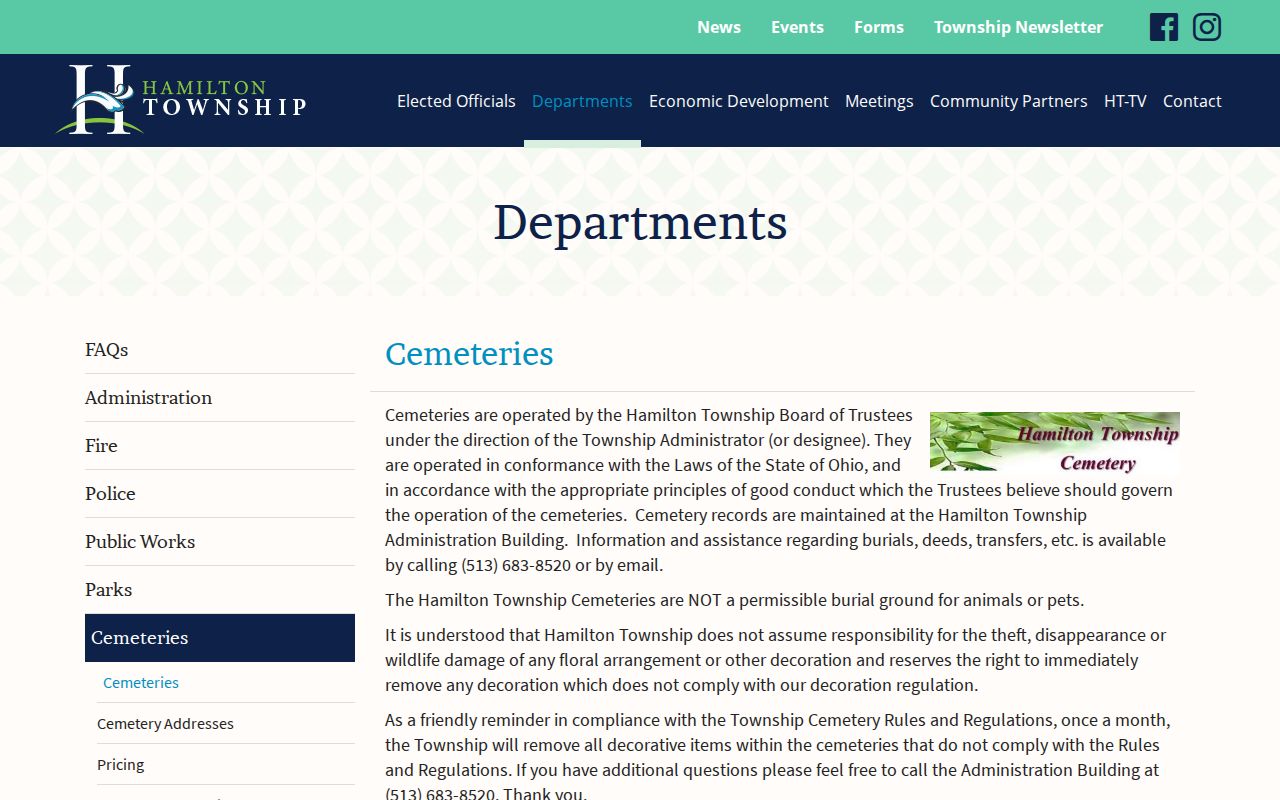
A cemetery lot deed can connect a surname to a place and purchaser, but it is not proof that the person remained a Township resident. This carefully limited evidence is often most useful beside an obituary, probate file, or Recorder instrument.
For county-created older records, the Records Center & Archives request route accepts short, specific inquiries. Its public collection makes records created 75 years ago or more in its holdings researchable; newer material belongs with the originating department. The Center's guide allows researchers to select a department and index, filter and sort results, then open a scanned document when a link is present.
Note: A focused record request names the office, record series, person or place, and date range, which gives the custodian a practical item to locate.